EN
EN


"That was the 2023 wine year!"
The Ahr wine harvest report 2023
Guest article by Carolin Groß, consultant Ahrwein e.V.
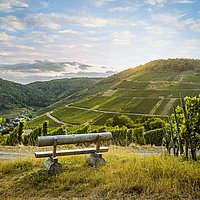
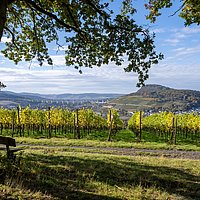
The golden autumn has arrived in the Ahr Valley. While the first deciduous trees have already lost their leaves, the vineyards are glowing in all shades of red and yellow. In the wine cellars of the wineries and cooperatives on the Ahr, the must of the promising 2023 vintage is fermenting diligently. The 2023 wine year began warm and promising for the winegrowers, but showed its challenges in the second half of the year.


The year of the winegrower
Winter
After an unusually mild start to the year and a New Year's Day with an impressive 16 degrees Celsius, the spring initially developed favourably for viticulture. High rainfall ensured optimal growing conditions and the vines developed all their buds (inflorescences).
Spring
Just in time for April, the rainfall decreased and flowering proceeded smoothly - without being disturbed by strong winds or heavy rainfall. As a result, almost all the flowers were pollinated and fruit set developed. The grapes had an above-average number of berries per cluster, giving hope for a promising harvest. The density of the berries was remarkable.
Summer
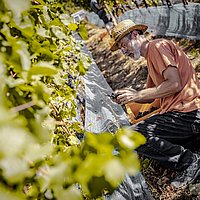
In contrast to 2019 and 2020, 2023 spared the winegrowers on the Ahr from heatwaves and the risk of sunburn on the grapes. The temperature only rose above 30 degrees on two days in June. The vines developed splendidly thanks to the soil's replenished water balance during the winter. The winegrowers of the Ahr utilised the lush growth to significantly increase the quality of the vines once again. The yield was reduced while the grapes were still unripe in order to improve the quality of the harvest later on.
Unfortunately, the winegrowers were surprised by a change in the weather towards the end of June. July and August each had eleven days of rain per month and average rainfall of 85 mm per square metre was not uncommon. The heavy rainfall suddenly increased the risk of peronospora and premature rotting of the berries, particularly in the case of Pinot Noir, which is so special to the Ahr.
Autumn
After a rainy midsummer on the Ahr, it looked as though the 2023 harvest would only be able to start quite late. Fortunately, however, the weather changed and September turned out to be dry, warm and with mild nights. The increased rainfall in the summer had optimally nourished the vines, allowing the grapes to ripen quickly thanks to increased photosynthesis. Most winegrowers began the grape harvest in the second week of September and finished after around five weeks. This year, it was even possible to harvest Riesling grapes for noble sweet wines. In Altenahr and Bad Neuenahr-Ahrweiler, the botrytis fungus provided material for Trockenbeerenauslese wines in the first two weeks of October.

A short status report from the wine cellar
So far, the 2023 vintage is fermenting well in the cellars and is full of flavour.
The good supply of nutrients to the vines and grapes throughout the wine year has enabled fermentation to start easily and progress quickly.
The flavours of the wines are developing satisfactorily.

About the author
Carolin Groß has headed the association's office in Bad Neuenahr-Ahrweiler as Ahrwein Officer since July 2022. She grew up in the Ahr Valley and, after training as a tourism and leisure management assistant at Ahrtal-Tourismus, initially worked at Weingut Kloster Eberbach as an event manager and marketing team leader. After five and a half years in the Rheingau, she is now back in her home region and coordinates the association's fortunes here with a great deal of passion, experience and an excellent network.

A wine and its valley
Small but beautiful: the Ahr is a speciality among the 13 German wine-growing regions. Find out everything you need to know about Ahr wine and its winegrowers.
More blog posts about the Ahr valley